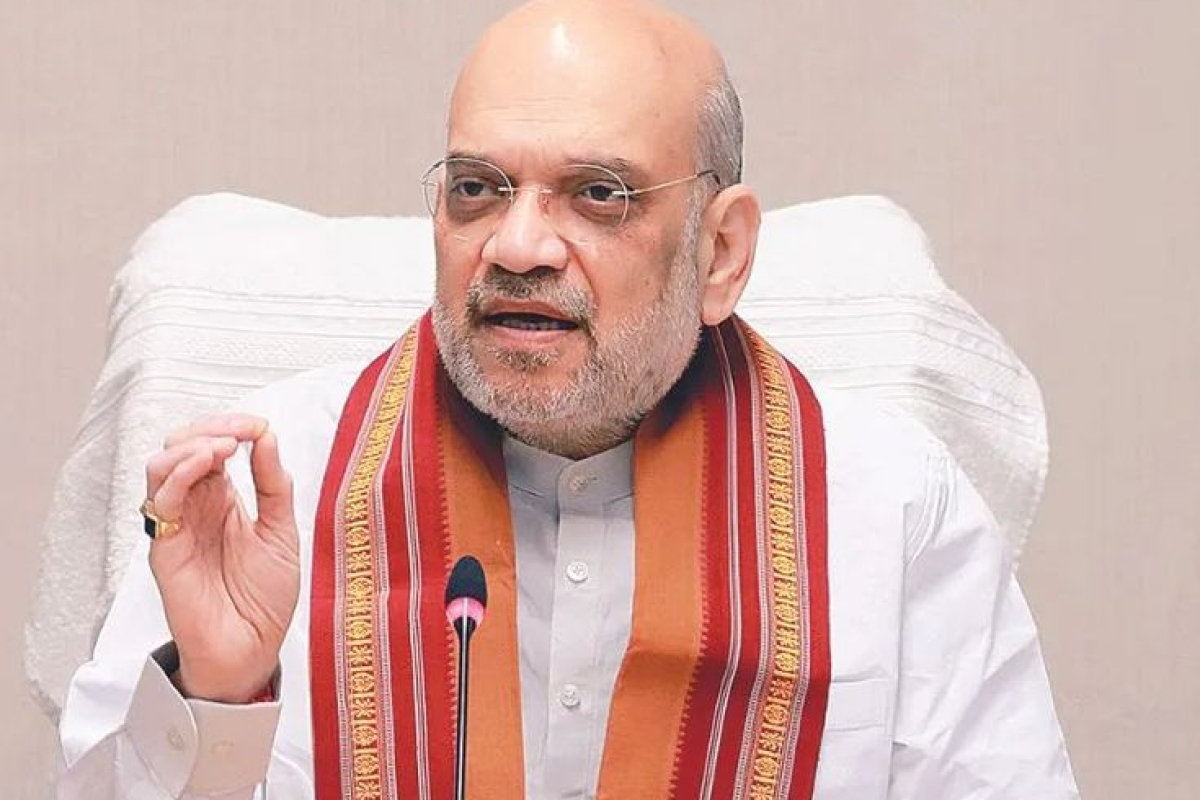
Union Home and Cooperation Minister Amit Shah announced that India’s first national university for the cooperative sector—Tribhuvan Sahkari University (TSU)—will help eliminate nepotism and usher in transparency by ensuring that only trained professionals are hired in the cooperative sector.
Speaking at a function in Anand, Gujarat, Shah laid the foundation stone for the university, which will be built over 125 acres at a cost of ₹500 crore.
“Earlier, there was no proper training system for cooperative sector employees. Now, only those who graduate from this university will get jobs in the sector,” Shah said, emphasizing that the move will end ‘bhai-bhatija vaad’ (nepotism) and increase professionalism.
Shah said the university will fill existing gaps in the cooperative sector and support its rapid growth under Prime Minister Narendra Modi’s leadership. The cooperative movement currently involves:
40 lakh workers
80 lakh board members
30 crore Indians, roughly one in every four citizens
The university aims to train youth in technical, financial, and managerial skills, along with instilling values of cooperation and inclusion for Dalits, tribals, and women.
Addressing criticism over the university’s name, Shah clarified it honors Tribhuvandas Patel, a Congress leader and key figure in India’s dairy cooperative movement, not a religious figure.
“Tribhuvandas Patel was not from my party. BJP didn’t even exist at the time. He was a visionary who laid the foundation of India’s cooperative dairy sector under Sardar Patel’s guidance.”
In 1946, Patel established the Kheda District Cooperative Milk Producers Union, which later evolved into Amul. Today, Amul is a ₹80,000 crore business involving 36 lakh rural women, most of whom invested less than ₹100.
Shah also acknowledged the contribution of Dr. Verghese Kurien, known as the Milkman of India, while pointing out that it was Amul, not the critics, who actively celebrated his centenary.
The university will:
Train future cooperative professionals
Support policy making, data analysis, and long-term planning
Help fill the manpower needs of new institutions, including:
2 lakh Primary Agricultural Credit Societies (PACS), with 60,000 expected by year-end
Numerous new district dairies and other cooperative bodies
“This university will prepare 5-, 10-, and 25-year strategic plans to strengthen India’s cooperative sector,” Shah concluded.