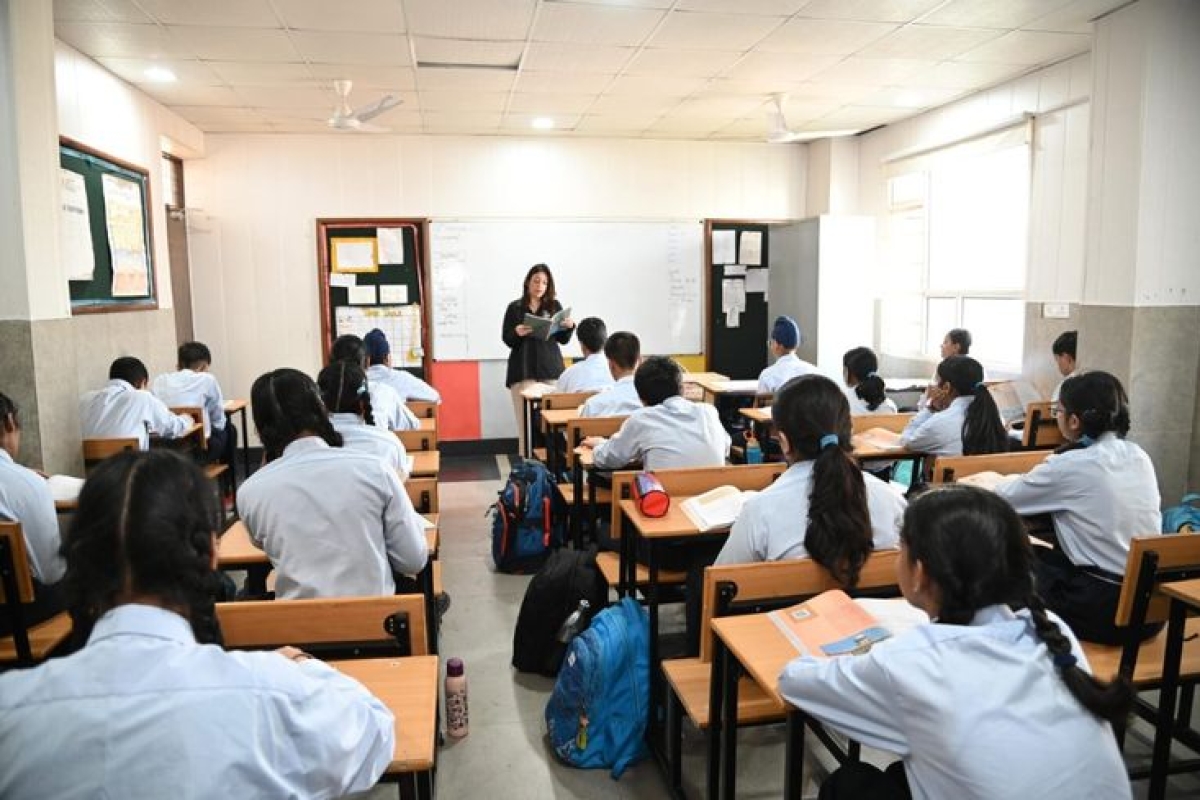
Starting from the academic year 2026, the Central Board of Secondary Education (CBSE) will conduct Class 10 board examinations twice annually. The board has officially approved new guidelines for biannual exams, as confirmed by Examination Controller Sanyam Bhardwaj.
Under this new format, the first phase of the exams will take place in February and will be mandatory for all students, while the second phase, scheduled for May, will be optional. Students can choose to appear in the second phase to improve their scores in up to three subjects among Science, Mathematics, Social Science, and Languages.
The results for the February session will be announced in April, and those for the May session will be declared in June. This allows students an additional chance to enhance their performance within the same academic year.
Internal assessments for Class 10 will be conducted only once during the academic year, aiming to streamline evaluation and reduce redundancy, as per the newly introduced CBSE norms.
Biannual exams mean students will get two opportunities per academic year to take their board exams. The first attempt (February) is compulsory, while the second attempt (May) is optional and can be used for score improvement.
It’s important to note that the twice-a-year board exam system will begin from 2026, not 2025. In 2025, Class 10 board exams were conducted only once, from 15 February to 18 March.
This move is in line with the National Education Policy (NEP) 2020, which recommends multiple exam opportunities in a year to reduce the high-stakes nature of board exams and lower student stress. Students in winter-bound schools will have the flexibility to appear in either phase based on their academic calendar.
The proposal for biannual board exams was first announced in February and shared publicly to gather feedback from stakeholders. The final decision reflects CBSE’s commitment to making board exams more flexible and student-friendly, aligning with broader education reforms under NEP.